In a democracy, criticism of court decisions is protected by the right to free expression. It can be vital for informing public debate.
However, in recent years, threats of violence, intimidation, and disinformation directed at federal judges, and defiance of court orders have gone far beyond healthy criticism and are fundamentally threatening judicial independence. The volume, intensity, and character of recent attacks on federal judges is profoundly eroding the rule of law in the United States.
Drawing on thirty-four interviews with an equal number of federal judges appointed by presidents of both major political parties and research of publicly available materials, this study assesses the four categories of threats identified in Chief Justice John Roberts’ Year End Report (2024) while situating them in historical perspective. It examines the impact of these threats on the federal bench and proposes recommendations for safeguarding the judicial independence that is a foundation of America’s constitutional order.
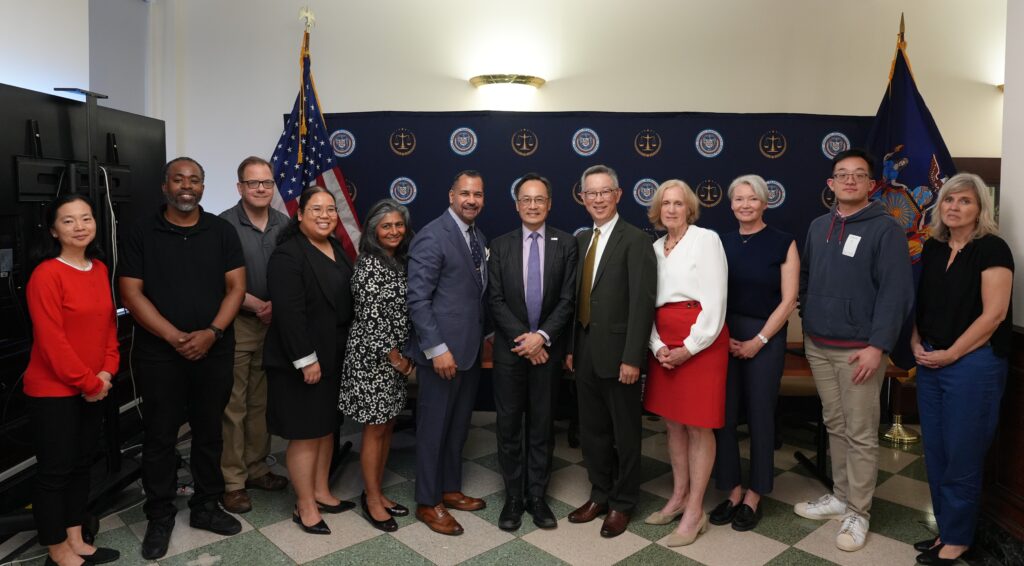
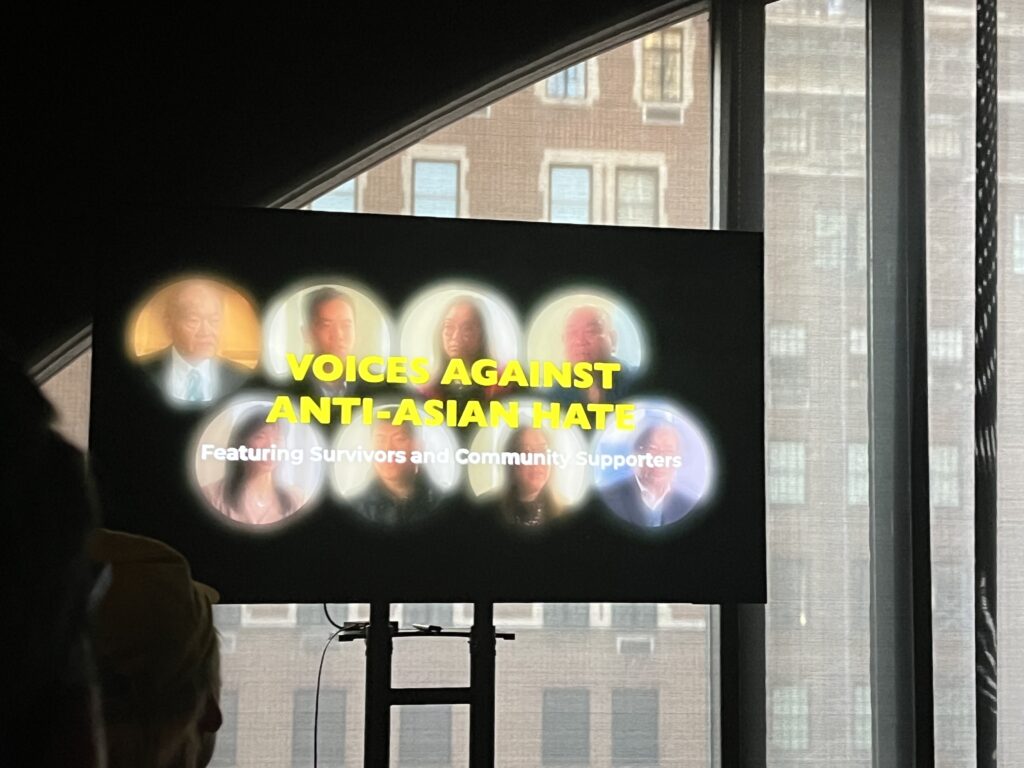
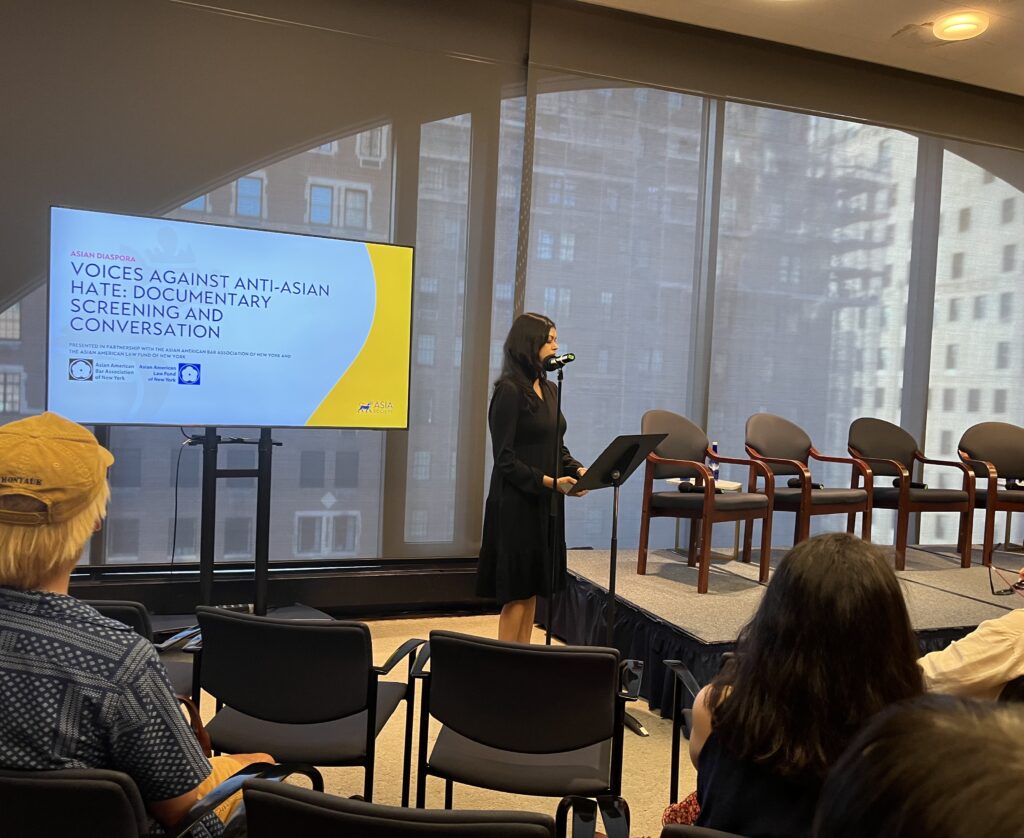
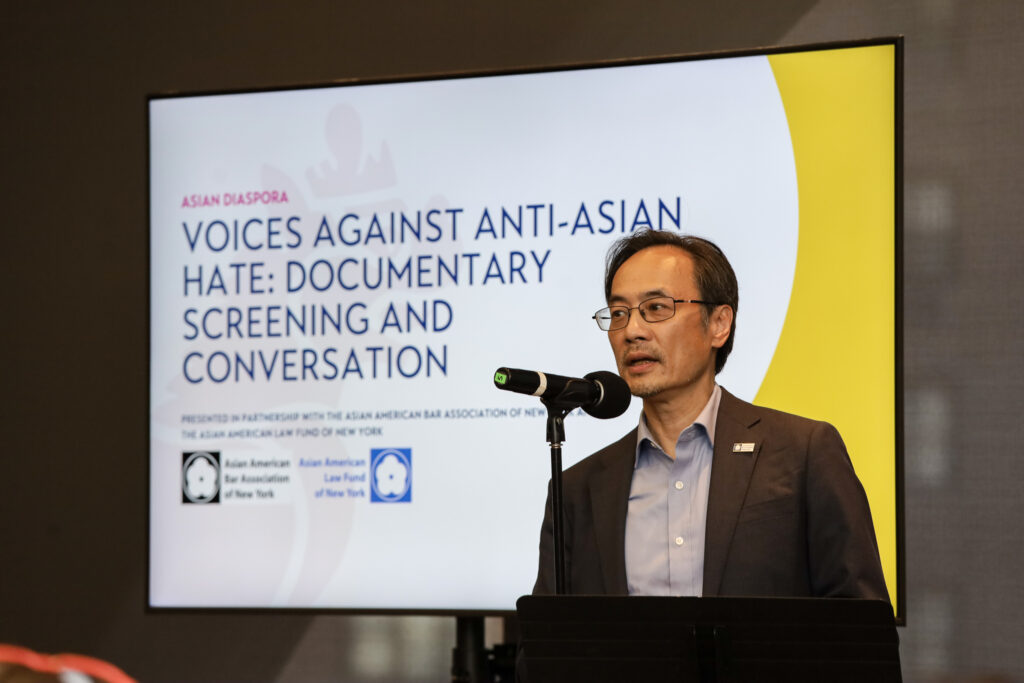
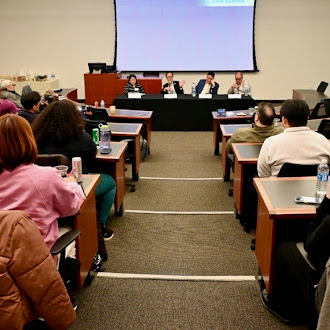
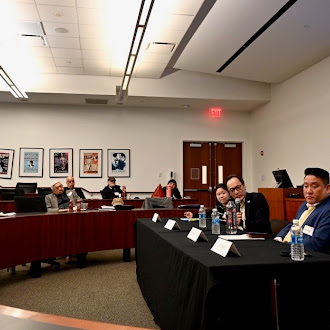
On Thursday, May 21, 2026, during AANHPI Heritage Month, the NYC Office of Special Narcotics brought together staff and community members for a screening of Voices Against Anti-Asian Hate, a documentary co-produced by the Asian American Bar Association of New York (AABANY) and the Asian American Law Fund of New York (AALFNY). The film centers on the deeply personal experiences of individuals and families impacted by anti-Asian violence. The event presented a moment to sit with America’s history of anti-Asian violence and its haunting legacy: from the exclusion laws of the 19th century, to the internment camps of World War II, to the waves of attacks that surged during the COVID-19 pandemic and continues today.
Throughout the documentary, the phrase, “This was not charged as a hate crime” was repeated again and again in multiple stories. One of the most striking stories was an interview with Patricia, who spoke candidly about her own experience navigating the system after being assaulted. Patricia did everything she could, seeking every available avenue, and still found no justice. After months without any response, she discovered AABANY’s Pro Bono Clinic, which provided actionable steps and legal advice to address her situation. For survivors who arrive vulnerable and unsure where to turn, that kind of grounded, practical guidance is as necessary as it is rare. Patricia pointed to what she identified as one of the most pressing and underappreciated challenges facing the AANHPI community: not a lack of willingness to report, but a lack of response from law enforcement.
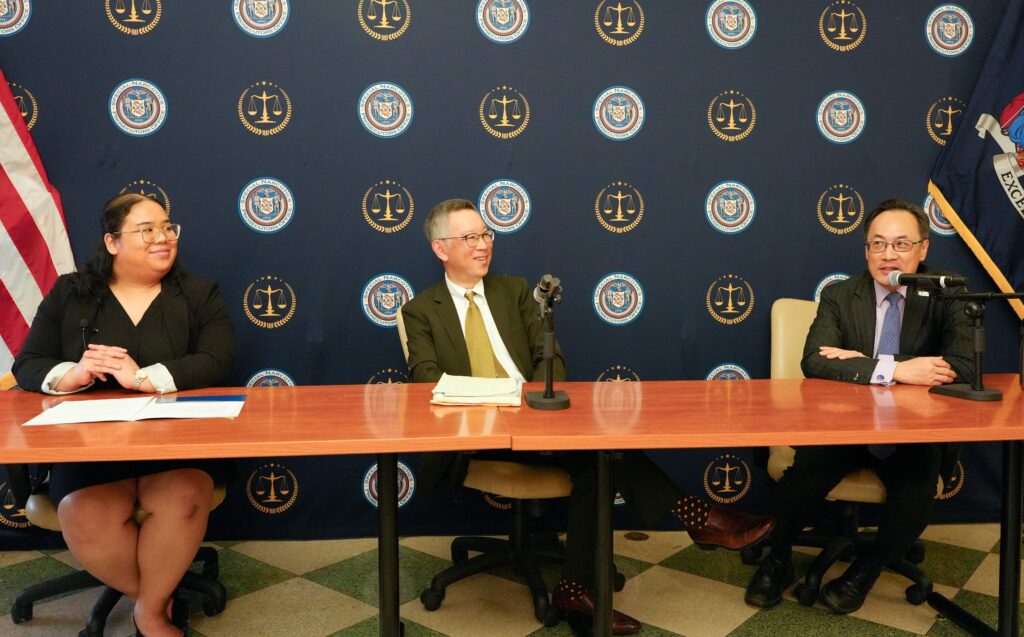
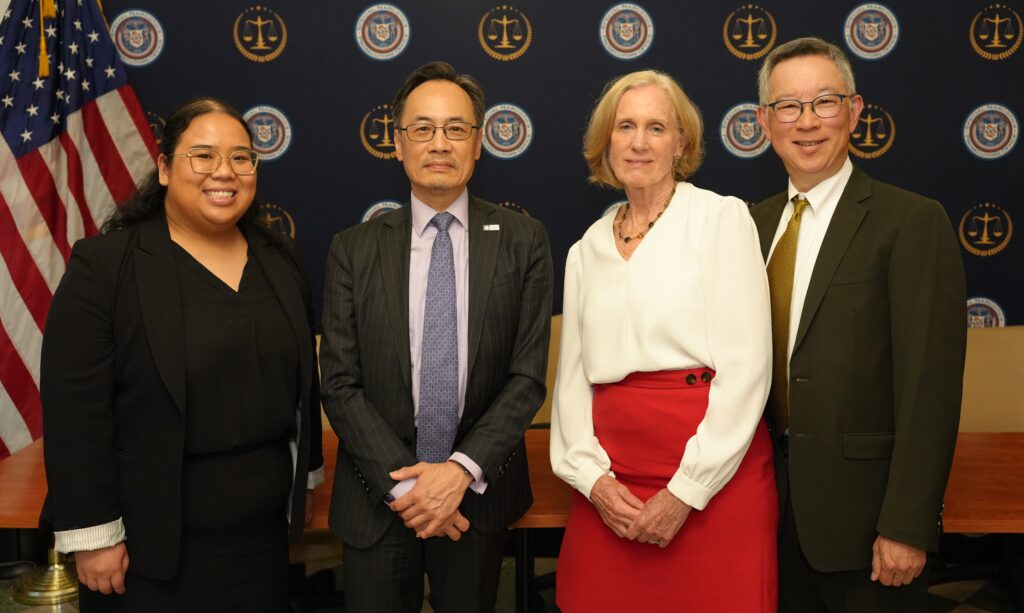
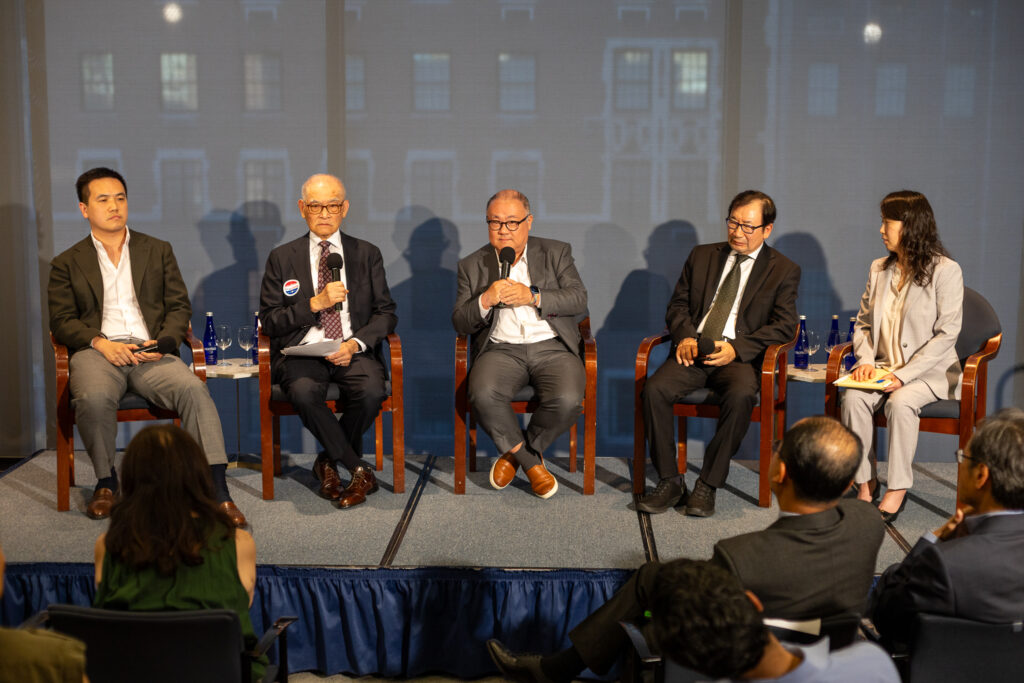
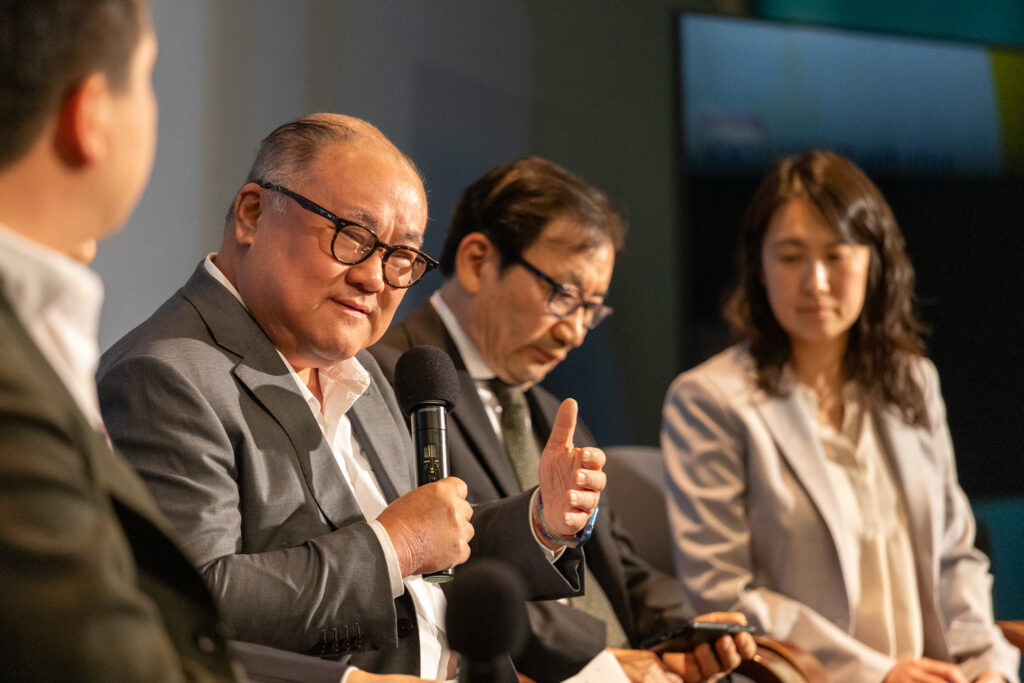
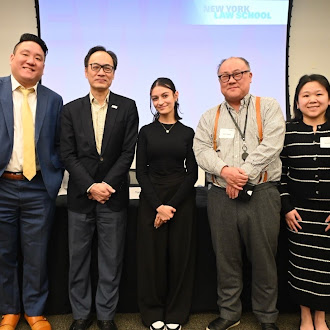
Following the screening, a panel discussion brought the film’s themes into direct conversation with legal experience and community advocacy. Moderated by Kay Nguyen, Deputy Chief of the Alternatives to Incarceration Unit for the Office of the Special Narcotics Prosecutor for the City of New York, the panel featured James Lin, a career prosecutor recently retired from the Brooklyn District Attorney’s Office, and Yang Chen, Executive Director of the Asian American Bar Association of New York.
Photo by Alexandra Bergin
During the discussion, in response to a question, James Lin explained the intended effect of repeating, “This was not charged as a hate crime.” James Lin drew on his decades of experience in Brooklyn to speak to the ways that bias-motivated violence can be invisible within the bureaucratic logic of charging decisions. While it’s relatively straightforward to prove a crime occurred, proving the intent behind it is far harder. Yang Chen discussed the long history of anti-Asian violence, going back to the 19th century, and how to this day, charging such attacks criminally as hate crimes remains elusive, leading to a heightened sense of frustration and futility in the face of what seems to the AANHPI community to be obvious racially-motivated hate.
What emerged from the event was not despair but a sense of shared responsibility. The law has tools. Hate crime statutes exist. The question the film poses and the question the panel returns to again and again is whether those tools are being used, and how we can all develop a better understanding of the forces at work, and what changes are needed to prevent future recurrence of hate and violence against vulnerable and marginalized communities.
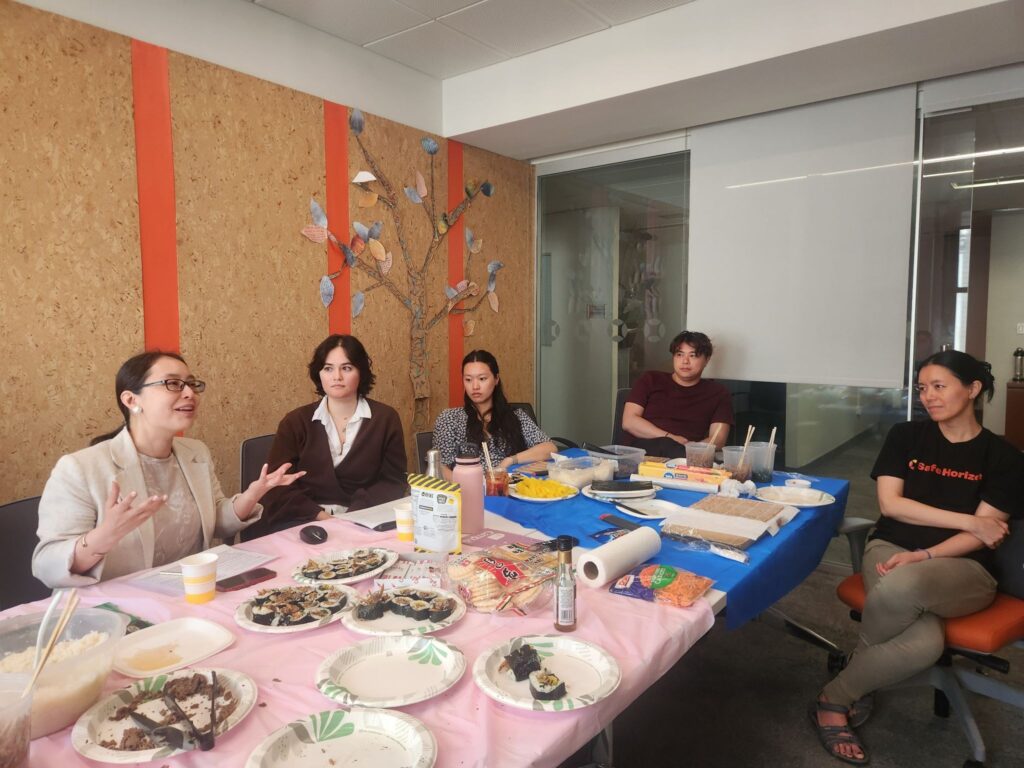
On May 29th, 2026, the Asian American Bar Association of New York (AABANY) joined the Safe Horizon AAPI Affinity Group in New York for a screening of the “Voices Against Anti-Asian Hate” documentary. The documentary produced by AABANY and AALFNY (Asian American Law Fund of NY) shares the experiences of survivors and families affected by the rise in anti-Asian violence in New York during the Covid-19 pandemic and highlights the legal and community response that followed.
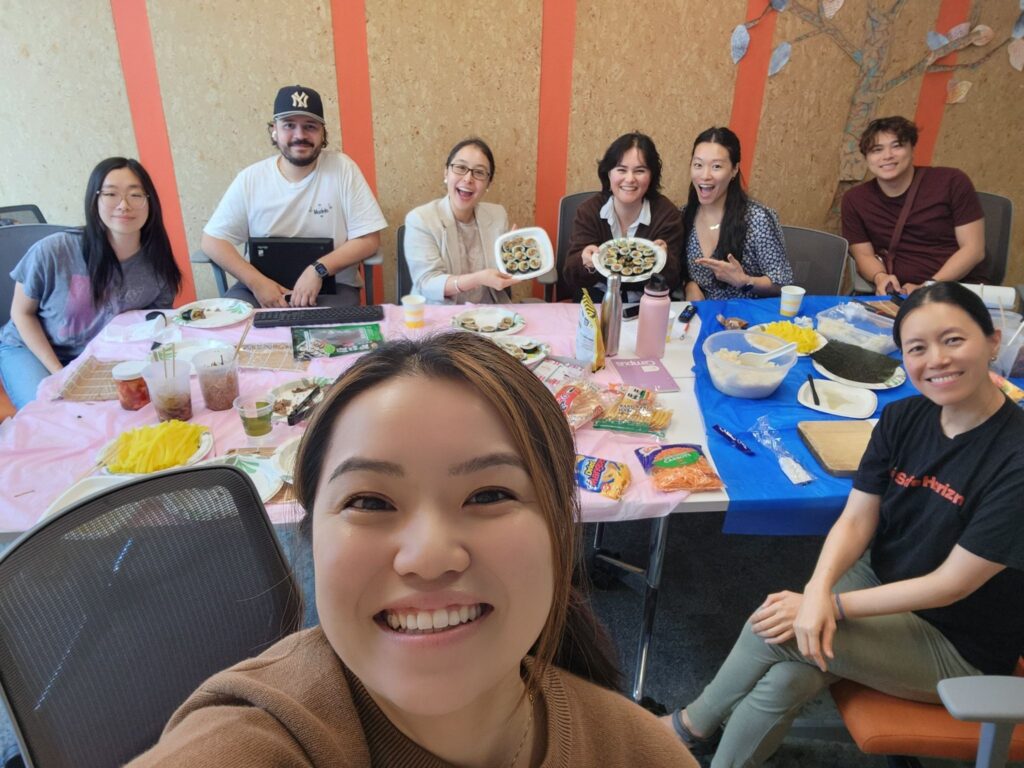
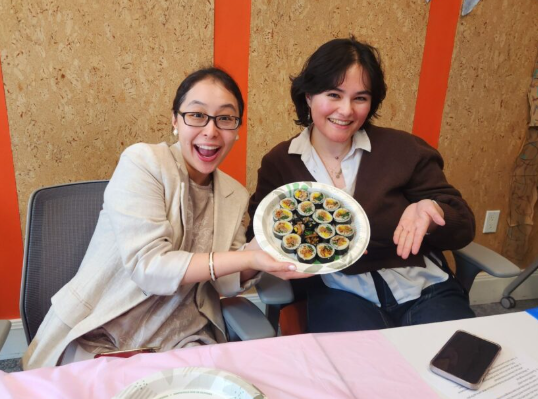
The Safe Horizon AAPI Affinity Group welcomed a gathering of colleagues in office and also over Zoom and emphasized the importance of allyship and community in increasingly uncertain times. The in-person contingent held a Kimbap making activity that accompanied the documentary screening, highlighting the importance of cultural celebration along with education.
The film featured deeply personal stories from Justin Go, father of Michelle Go; Sungkon Lee, father of Christina Yuna Lee; and Noel Quintana, a survivor of a violent subway slashing to his face. Their accounts highlighted the lasting impact of anti-Asian violence, the challenges victims face in seeking recognition and support, and the critical role of culturally sensitive pro bono legal advocacy.
Following the documentary screening, Safe Horizon AAPI Affinity Group Co-Chair Audrey Williams facilitated a discussion with Rachel Lee, President & General Counsel of Stand with Asian Americans and a member of AABANY’s Board and Anti-Asian Violence Task Force. The Q&A covered a diverse series of topics, ranging from the Task Force’s work to broader questions touching upon what is at the root of anti-Asian hate. Moreover, in reflecting on Safe Horizon’s role as a victim services nonprofit, Audrey and Rachel discussed the particular application of hate-crime definitions and culturally responsive care. Audrey and Rachel also responded to questions and comments from the group that joined virtually.
We thank the attendees who joined us in-person and virtually to attend the screening and provided their attention and deeply insightful comments. We are also grateful to the AAPI Affinity Group at Safe Horizon for hosting such a wonderful event, which incorporated both joy and serious discussion in an effort to give a platform to the survivors and families of Anti-Asian violence.
If anyone is interested in hosting their own screening of this documentary, contact Daphne Mei, Program Manager of the AABANY Anti-Asian Violence Task Force, at [email protected]. To contact the Task Force, email [email protected].
–Written by Kate Mao, for the AABANY Anti-Asian Violence Task Force
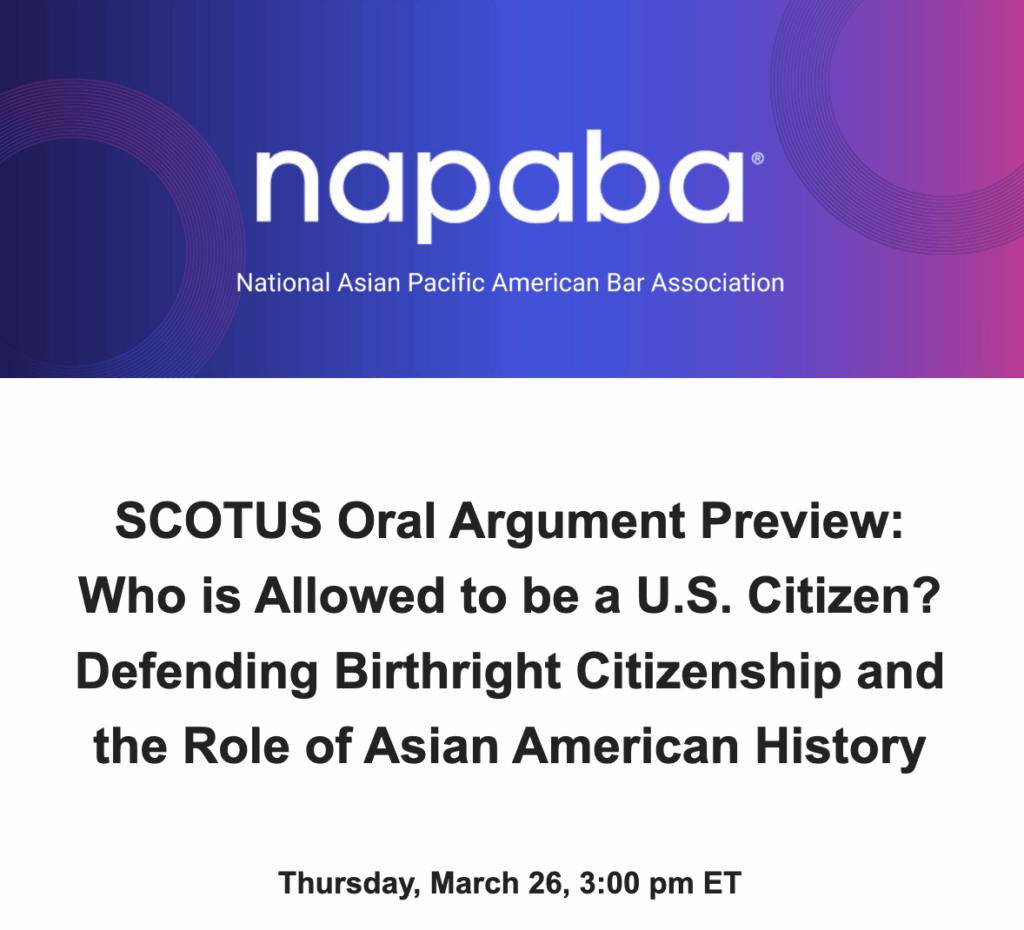
The National Asian Pacific American Bar Association (NAPABA) will host a webinar titled “SCOTUS Oral Argument Preview: Who is Allowed to be a U.S. Citizen? Defending Birthright Citizenship and the Role of Asian American History” on Thursday, March 26 at 3:00 p.m. ET.
The program will preview the upcoming U.S. Supreme Court oral arguments in Trump v. Barbara, a case addressing the scope of birthright citizenship under the Fourteenth Amendment. On April 1, 2026, the Court is scheduled to hear arguments concerning Executive Order 14160, which declared that only children born to U.S. citizens or lawful permanent residents would automatically receive citizenship at birth. The executive order immediately faced legal challenges across the country.
NAPABA joined a broad coalition of bar associations in filing amicus briefs opposing the order. The March 26 webinar will discuss NAPABA’s role in defending birthright citizenship in the lower federal courts and before the Supreme Court, as well as the broader legal and historical context surrounding the issue.
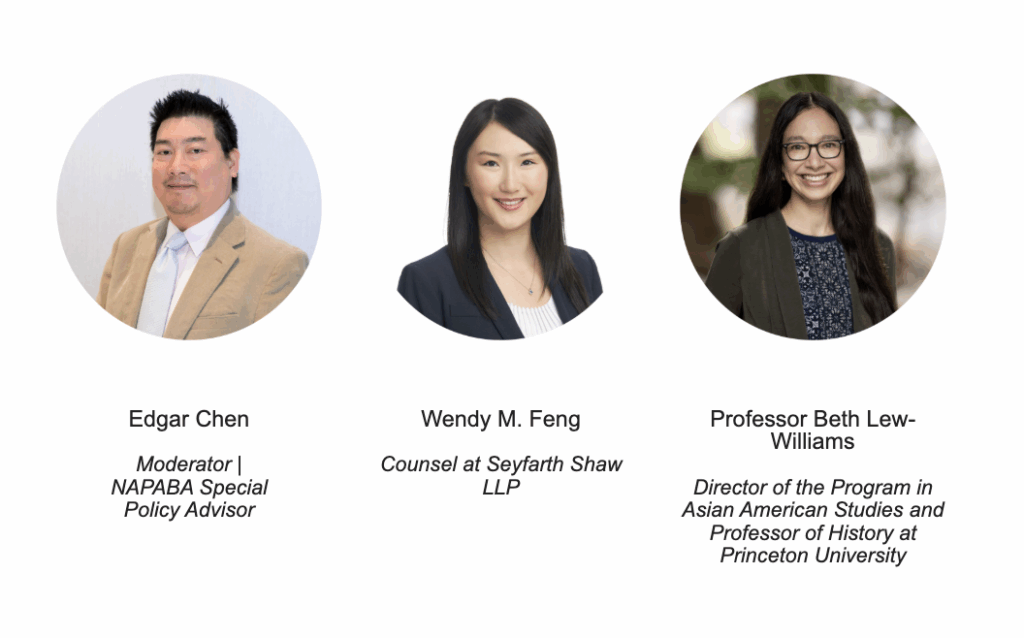
The panel will feature Professor Beth Lew-Williams, Director of the Program in Asian American Studies and Professor of History at Princeton University. Professor Lew-Williams is the author of The Chinese Must Go: Violence, Exclusion, and the Making of the Alien in America (Harvard University Press, 2018), a widely acclaimed work examining the history of anti-Chinese violence and exclusion in the United States.
Also joining the discussion is Wendy M. Feng, Counsel at Seyfarth Shaw LLP and lead outside counsel for the legal team representing NAPABA in the litigation. The program will be moderated by Edgar Chen, NAPABA Special Policy Advisor.
Together, the panelists will examine the legal arguments in Trump v. Barbara, the historical foundations of birthright citizenship, and the role Asian American legal history plays in shaping contemporary constitutional debates.
Registration for the webinar is free and open to the public. Click here to learn more and register for the event.
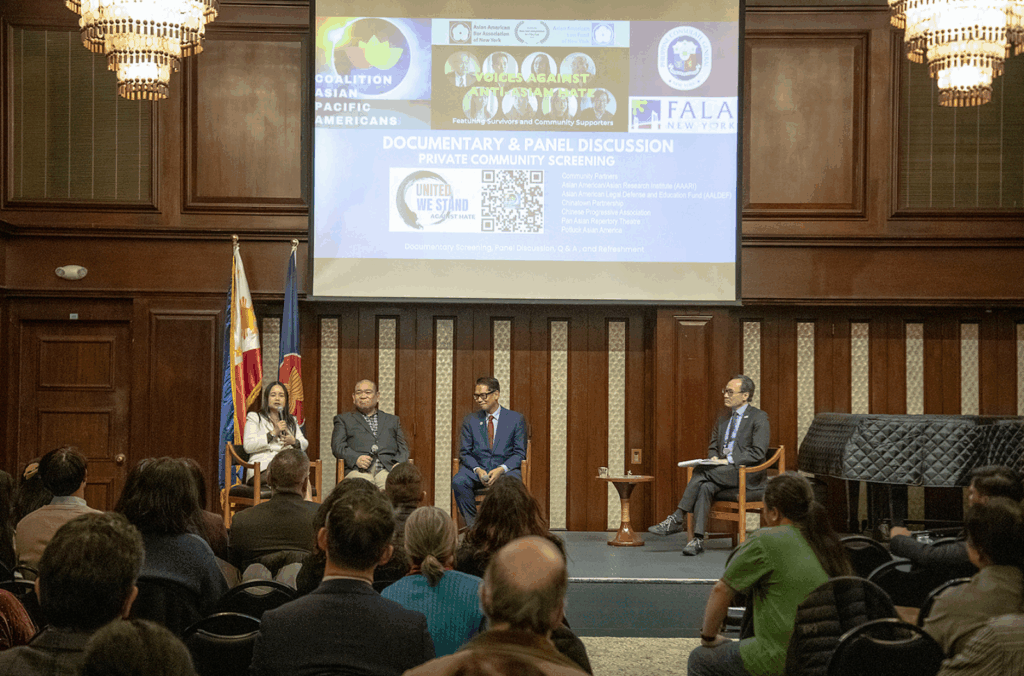
On February 25, 2026, the Asian American Bar Association of New York (AABANY), together with the Asian American Law Fund of New York (AALFNY), the Coalition of Asian Pacific Americans (CAPA), and the Filipino American Lawyers Association of New York (FALA NY), joined the Philippine Consulate General in New York for a screening of Voices Against Anti-Asian Hate. The documentary, produced by AABANY and AALFNY, shares the experiences of individuals and families affected by anti-Asian violence in New York and highlights the legal and community responses that followed.
Philippine Consul General Senen Mangalile opened the evening by emphasizing the importance of confronting hate through unity and truth, thanking AABANY and AALFNY for documenting the community’s experiences. As he reflected on the documentary’s purpose, he reminded attendees that hate cannot be fought with more hate, but by showing that it has no basis or merit.
The film featured deeply personal stories from Justin Go, father of Michelle Go; Sungkon Lee, father of Christina Yuna Lee; and Noel Quintana, a survivor of a violent subway slashing to his face. Their accounts highlighted the lasting impact of anti-Asian violence, the challenges victims face in seeking recognition and support, and the critical role of pro bono legal advocacy.
Following the screening, a panel discussion moderated by AABANY Executive Director Yang Chen featured Noel Quintana, U.S. Commission on Civil Rights Commissioner Glenn D. Magpantay, and Groombridge Wu Co-Founder and Partner Jennifer H. Wu. Panelists reflected on the ongoing presence of anti-Asian hate, the cultural barriers that sometimes prevent victims from speaking out, and the complexities of representing victims navigating trauma, media attention, and systemic barriers.
Throughout the discussion, speakers emphasized the importance of solidarity and coalition-building with other communities confronting hate and discrimination. The evening concluded with closing remarks from AALFNY President Sylvia Chin, who highlighted AALFNY’s Anti-Asian Violence Task Force, scholarship programs, and AABANY’s ongoing pro bono initiatives supporting the community.
The program ended with a reception where attendees continued reflecting on the documentary’s message and the ongoing work needed to combat anti-Asian hate.
We extend our sincere gratitude to the Co-Sponsors who supported the screening:
We thank the nearly 100 attendees who came, representing different facets of the New York community, despite the difficult travel conditions presented by the snowstorm.
If anyone is interested in hosting their own screening of this documentary, contact Daphne Mei, Program Manager of the AABANY Anti-Asian Violence Task Force, at [email protected].
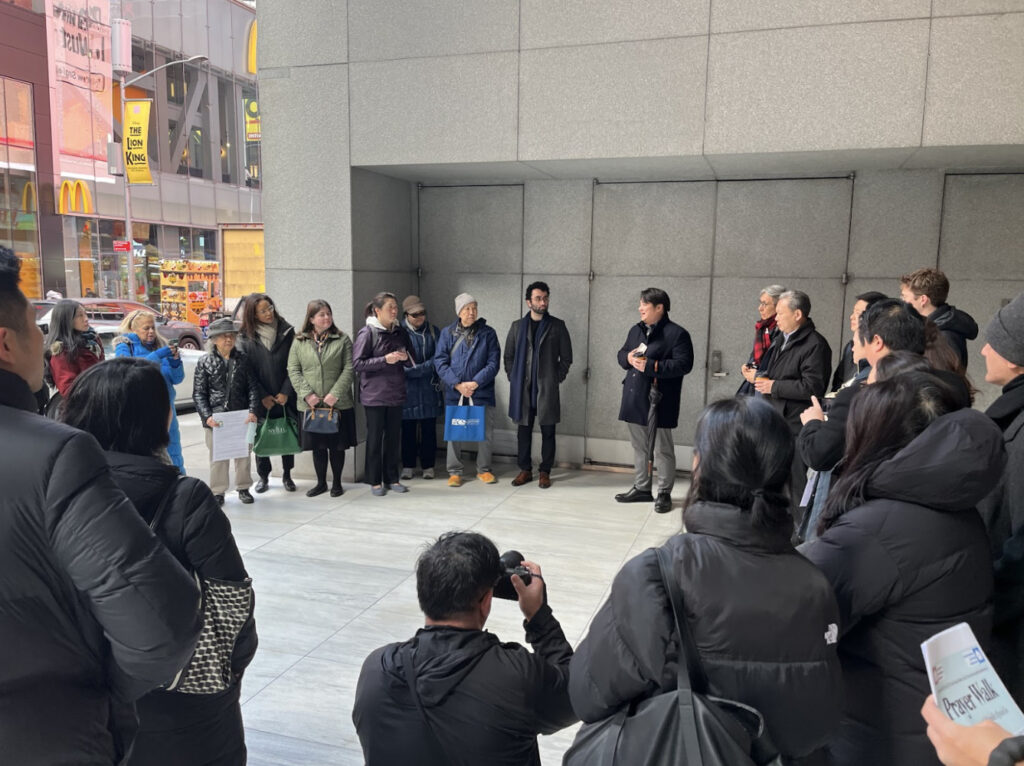
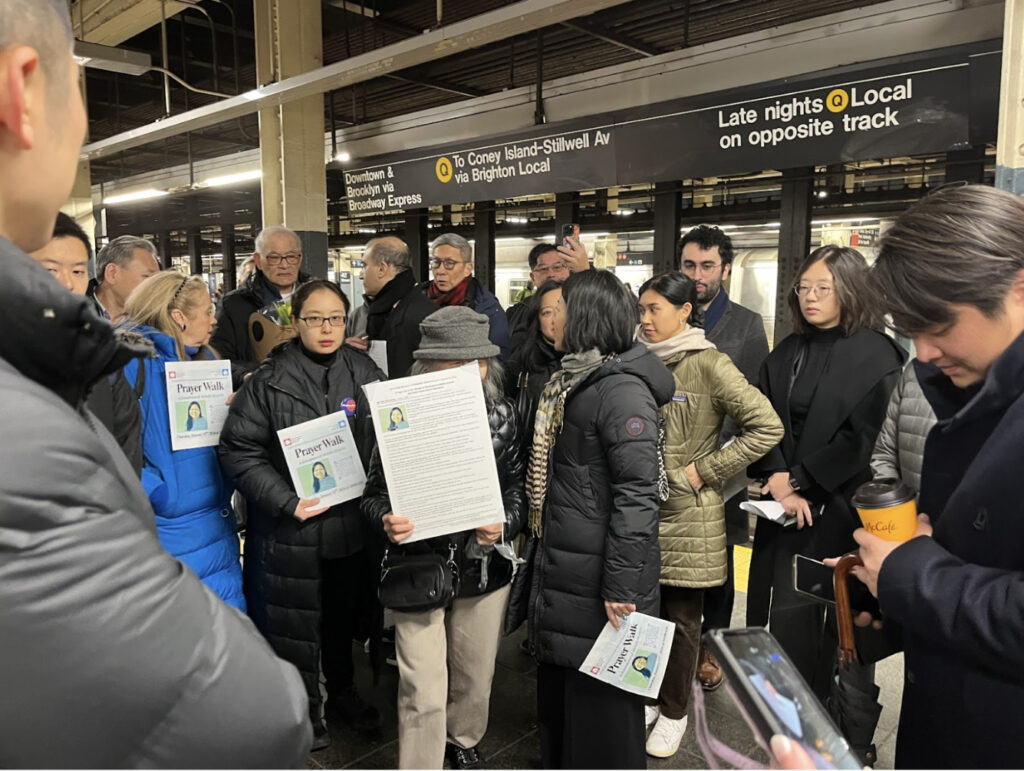
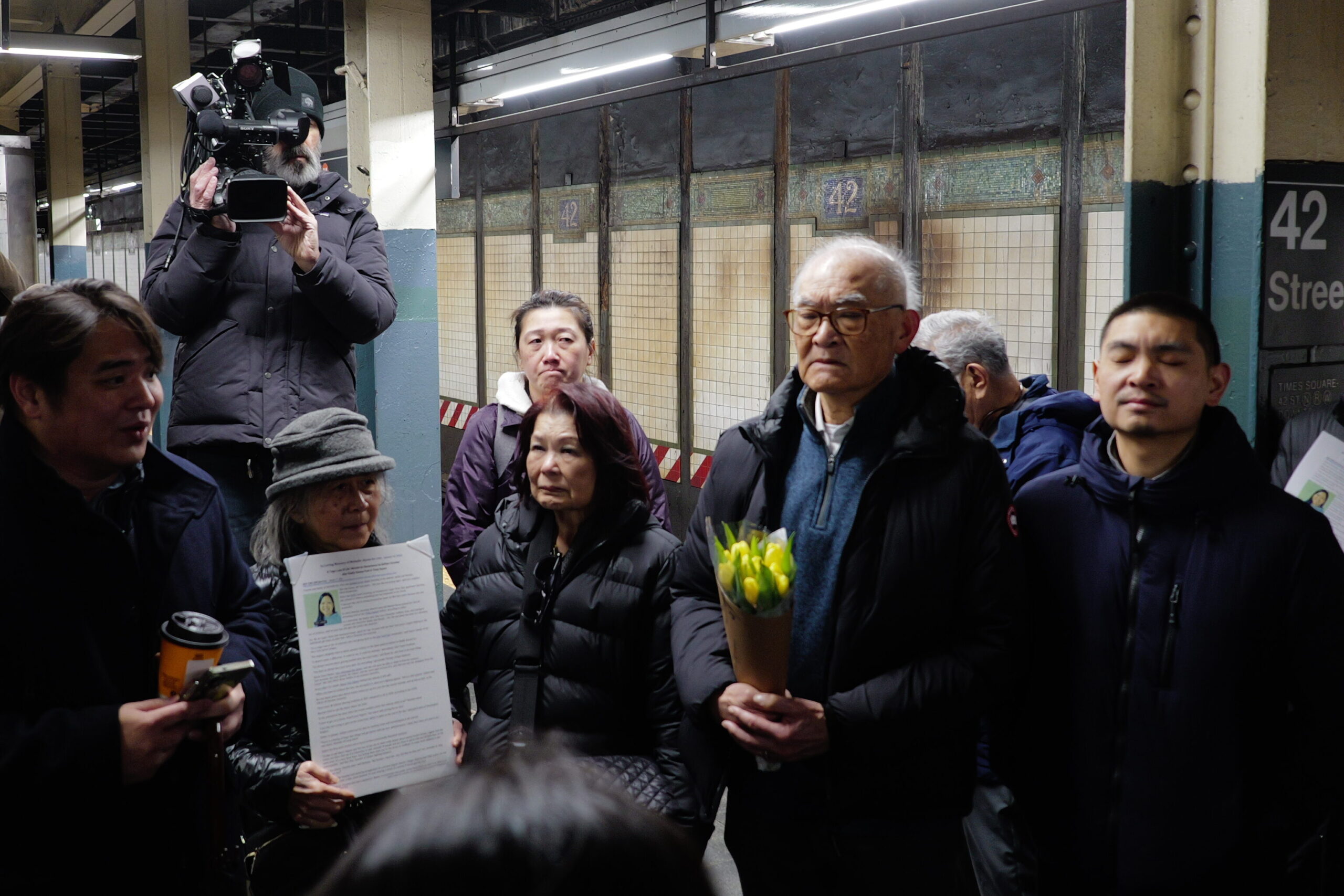
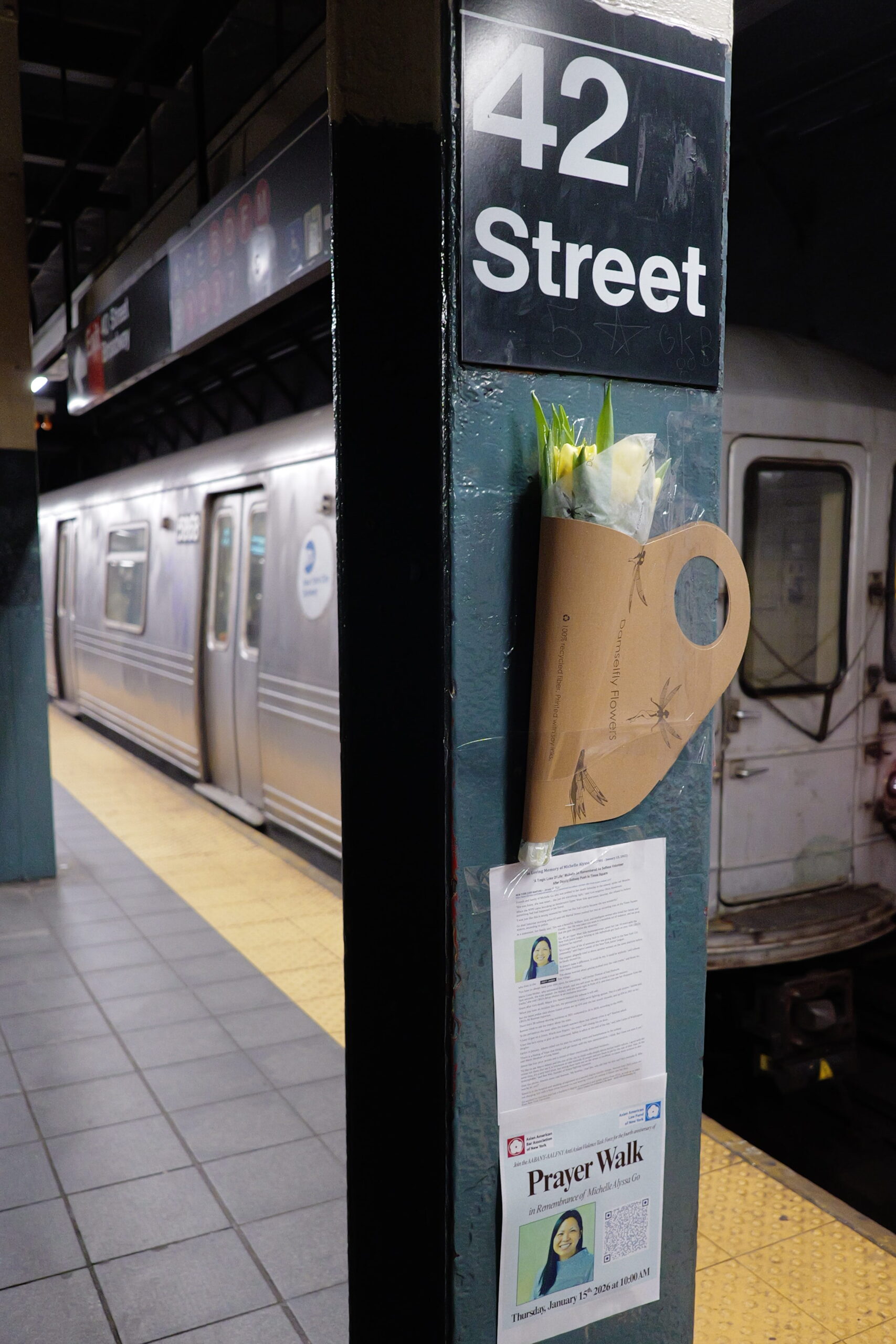
On the morning of Thursday, January 15, 2026, nearly 50 people braved the bone-chilling winds in Times Square to participate in a Prayer Walk commemorating the anniversary of Michelle Alyssa Go’s passing.
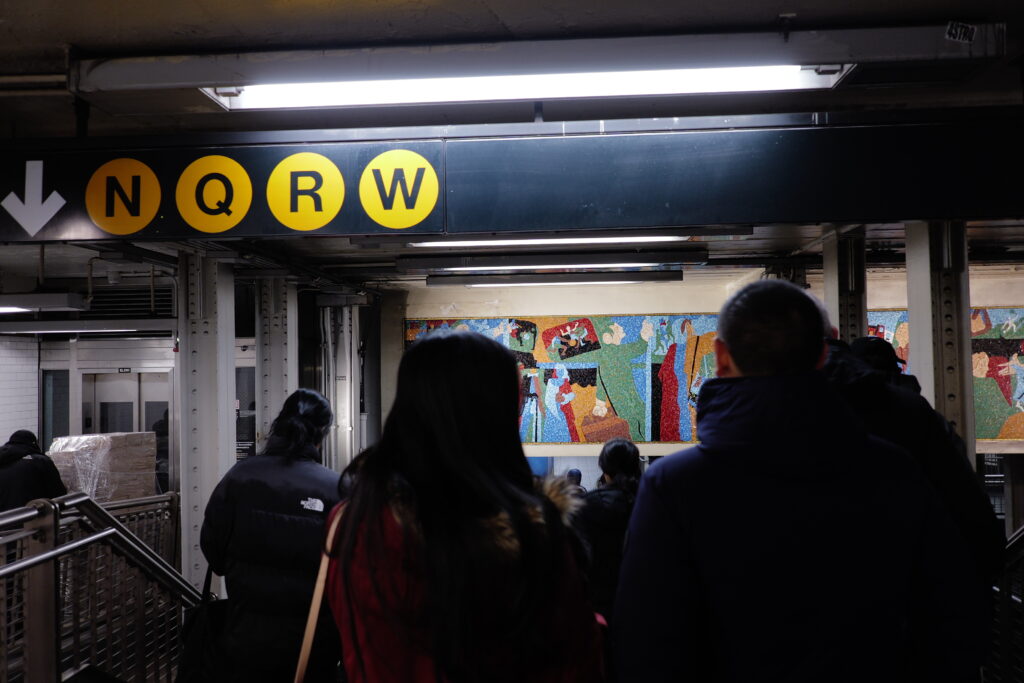
Four years ago, on an early Saturday morning, Michelle was standing near the edge of the downtown R subway platform at Times Square when Martial Simon charged at her and pushed her in front of an oncoming train, leading to her death.
Photo by Wellington Chen
Simon, then a 61-year-old homeless man with a history of schizophrenia and prior arrests, was later charged with second-degree murder in connection with Michelle’s death. This act of violence is a tragic example of the surge in anti-Asian hate incidents occurring in America during the COVID-19 pandemic. As noted by the Pew Research Center in 2023, anti-Asian sentiment rose following inflammatory political rhetoric, disinformation, and online extremism, specifically public officials’ use of terms like “Chinese Virus.” Though Asian Americans Advancing Justice (AAAJ) reported a slight decline in 2025 from 2023, anti-Asian hate crimes were still nearly triple pre-pandemic levels. California, New Jersey, New York, Washington, and Massachusetts reported the highest frequency.
Photo by Wellington Chen
During the Prayer Walk, Reverend Cristobal Tong led the group to four specific stops, following the routine route Michelle took that day. Justin Go, Michelle’s father, shared highlights of her tragically short life with the mourners. Born in Berkeley and raised in Fremont, California, Michelle earned a degree in economics from UCLA in 2002, an MBA from NYU in 2010, and later worked at Deloitte in mergers and acquisitions. Michelle was an avid traveler who had explored the Caribbean as a child and frequently traveled to visit friends. Justin highlighted Michelle’s selfless nature, noting that she spent her free time volunteering to help homeless people and assist low-income New Yorkers through the New York Junior League. Despite his grief, Justin emphasized the importance of celebrating Michelle’s life and encouraged loved ones to let their suffering be temporary, as Michelle would have wanted them to continue finding joy in life.
Photo by Wellington Chen
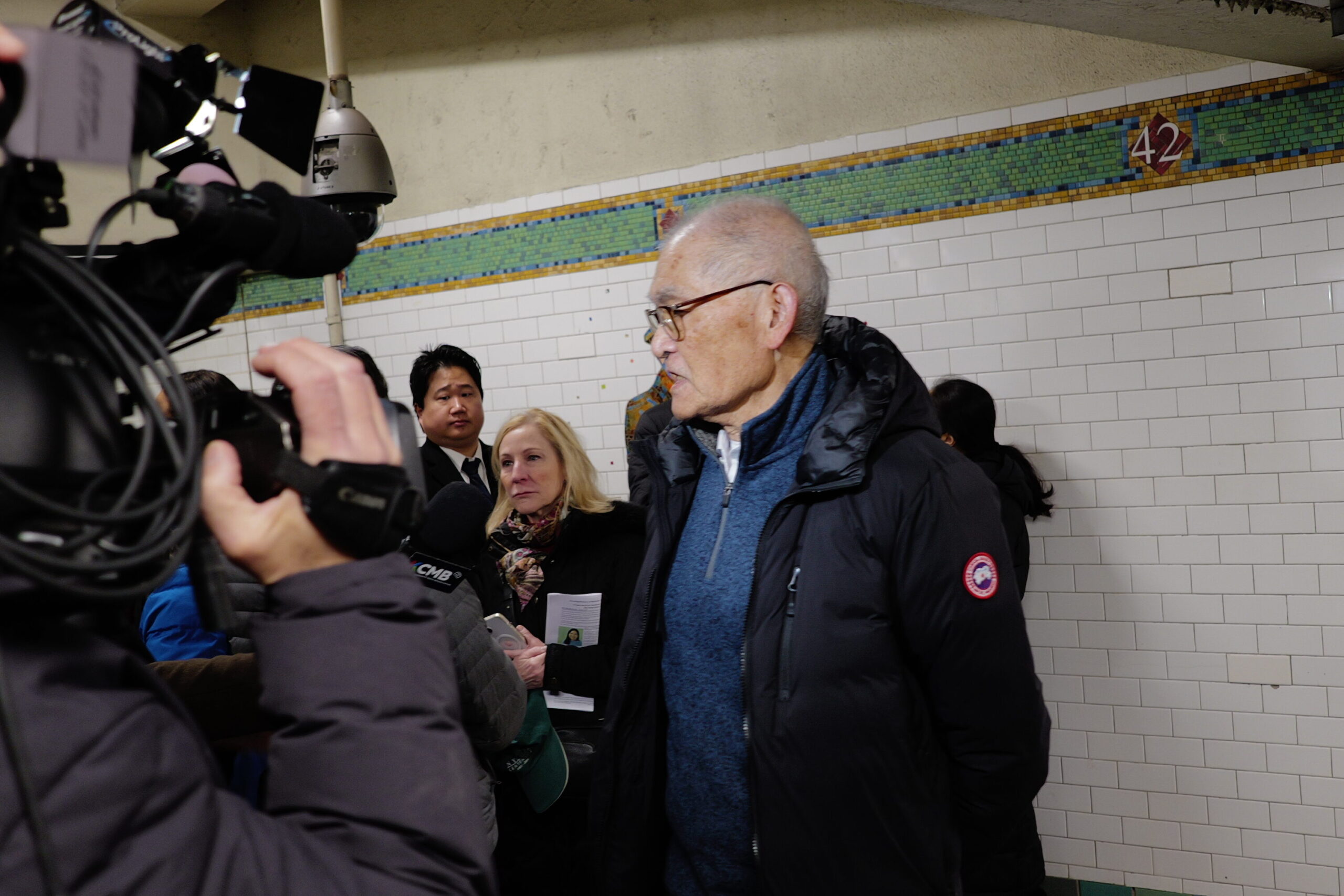
The Prayer Walk drew participation from a broad range of community figures and prominent Asian American New Yorkers. Notable attendees included attorney and activist Rockwell ‘Rocky’ Chin and retired U.S. Magistrate Judge Marilyn Go, both of whom are Co-Founders of AABANY. Additionally, Rachel Lee, President of Stand with Asian Americans and Co-Chair of AABANY’s Issues Committee, played a key role in organizing the walk.
I asked Elaine Chiu, a professor at St. John’s University School of Law, who attended the Prayer Walk, about the justice that may or may not be served for the Go family. Professor Chiu, who had previously chaired the Anti-Asian Violence Task Force, discussed the systemic failures surrounding this legal case. She emphasized that lawyers need to recognize that the justice system was not designed to effectively prosecute or assess individuals with severe and fluctuating mental instability. Furthermore, she lamented that the system is currently unequipped to provide defendant Martial Simon with adequate mental health care or to offer the Go family the justice they deserve.
Simon was initially deemed mentally unfit for trial and held at Kirby Forensic Psychiatric Center. After treatment, he passed a mental health evaluation in April 2024 but stopped taking his medication upon being transferred to Rikers Island. His disruptive behavior during a court appearance on April 30 resulted in his return to Kirby.
In response to systemic mental health issues, Governor Kathy Hochul signed legislation on May 9, 2025, allocating over $196 million to improve statewide mental health care, including $160 million for 100 new forensic inpatient psychiatric beds in New York City, and strengthening involuntary commitment laws and Kendra’s Law, which allows judges to mandate Assisted Outpatient Treatment (AOT) for individuals with severe mental illness who cannot safely live in the community without supervision. This law ultimately aims to prevent dangerous relapses while protecting both the public and the patient.
Photo by Wellington Chen
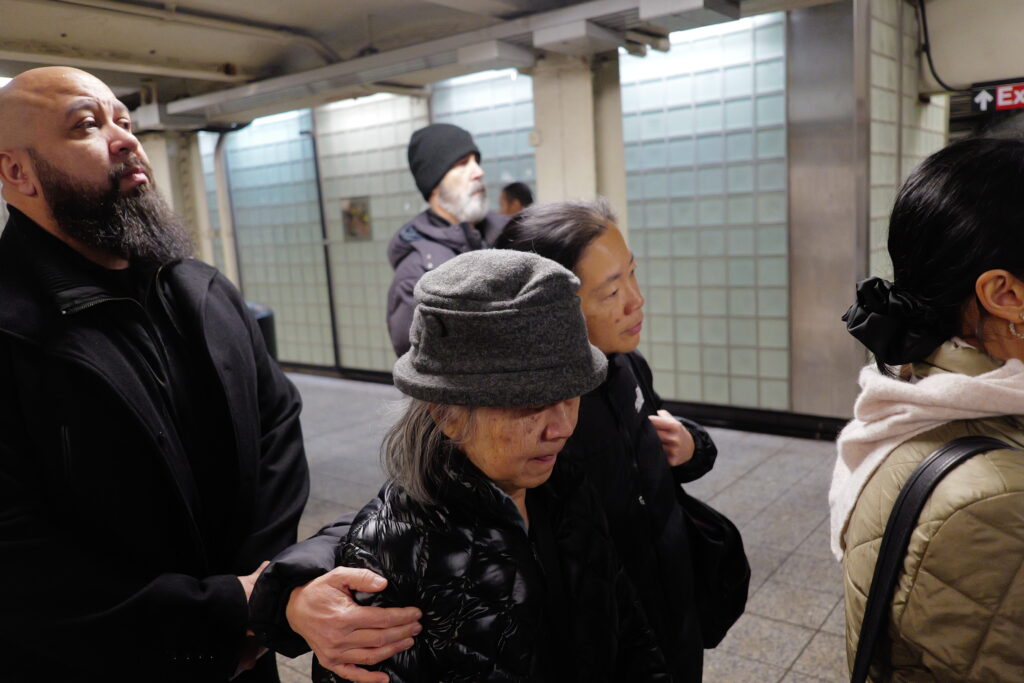
The Prayer Walk concluded at the R Times Square subway station, where the group stood on the platform to pray near the site where Michelle was murdered four years ago. Michelle was only 40 at the time of her death, and attendees who knew her remembered her as a bright and kind individual. Her death continues to fuel concerns regarding anti-Asian violence and the “revolving door” of psychiatric institutionalization. While the prosecution remains determined to bring Martial Simon to trial, the community continues to pray that lasting justice will finally be achieved.
Photo by Wellington Chen
The Prayer Walk was organized by AABANY’s Anti-Asian Violence Task Force (AAVTF), established in response to the surge in anti-Asian hate during COVID-19. The Task Force, at its formation five years ago, included leadership from AABANY’s Issues, Pro Bono and Community Service, Prosecutors, Student Outreach, Legal Referral and Information Service, and Academic Committees. Partnering with AABANY’s affiliate, the Asian American Law Fund of New York (AALFNY), the AAVTF launched the Turning the Tide (T3) Project, a comprehensive initiative focused on education, communication, advocacy, and research. After releasing two reports, the AAVTF produced a documentary, “Voices Against Anti-Asian Hate,” which humanized victims’ and survivors’ experiences and was nominated for best short documentary at the New York Independent Art Film Fest. Throughout 2025, the film was screened nineteen times for various groups. A notable screening at the Asia Society featured a moving panel with Justin Go, Michelle Go’s father, and Sungkon Lee, Christina Yuna Lee’s father.
To view more photos from the Prayer Walk, click this link to the photo album. To learn more about AAVTF, please email [email protected].
Contact: Rahat N. Babar, Deputy Executive Director
WASHINGTON — On the day before Thanksgiving, blocks from the offices of the National Asian Pacific American Bar Association (NAPABA), an individual shot two members of the National Guard. Army Specialist Sarah Beckstrom, 20, tragically succumbed to her injuries on Thanksgiving Day, and Air Force Staff Sergeant Andrew Wolfe, 24, remains in critical condition. NAPABA mourns the loss of Specialist Beckstrom and extends our deepest condolences to her family, friends, and colleagues. We are holding Sergeant Wolfe, his loved ones, and the military community in our thoughts as he undergoes critical care.
We unequivocally condemn this horrific act of violence. Though a full investigation is pending, government officials revealed that the alleged perpetrator, who is now detained and faces criminal charges, arrived in the United States in 2021 from Afghanistan through a federal resettlement program.
The views from leaders at all levels play a powerful role in shaping how communities such as asylum seekers, refugees, and immigrants are understood. The criminal acts of one individual should not be used to paint an entire community, especially those who have sought protection from this Nation. Casting aspersions does nothing to advance public discourse, and instead, it serves to fuel hate, a fact that is all too familiar to the Asian American, Native Hawaiian, and Pacific Islander community.
The United States has taken on an obligation under domestic and international law to provide refuge to those fleeing persecution. This has particular resonance with the Asian American community. Nearly three million refugees from Southeast Asia fled conflicts in the 1970s, and new generations have arrived since. The protections offered by the United States as a leading signatory to the International Refugee Convention and 1967 Protocol are critical to uphold.
Countless numbers of Asian Americans and others throughout history fled persecution for a better life in the United States. We need not turn our back on history or the generations seeking refuge. NAPABA has consistently supported the refugee resettlement program and this Nation’s long history of welcoming those seeking the protections of our country.
On Tuesday, June 24, 2025, the Asian American Bar Association of New York (AABANY) co-sponsored a screening of its documentary “Voices Against Anti-Asian Hate” at the Asia Society in New York City. This newly released version, which had never been shown before, added an introduction providing historical context on anti-Asian hate and violence in America. The documentary focuses on the rise of anti-Asian hate crimes during the COVID-19 pandemic, featuring the voices of victims, their families, and community advocates who shared their personal experiences.
The event featured a screening followed by two panel discussions. The first panel featured selected participants from the film, including Michael Zhu, Justin Go, the father of Michelle Go, and Sungkon Lee, the father of Christina Yuna Lee. The second panel featured esteemed advocates Glenn Magpantay, Commissioner, U.S. Commission on Civil Rights, and Jennifer H. Wu, founding partner of Groombridge Wu Baughman & Stone, who discussed the systemic and historical factors that have contributed to the targeting of the AAPI community.
Photo by Dazhen Lu
The screening began with a short introduction by Neelam Chowdhary, Vice President of Education at Asia Society, who introduced the documentary and stated that “the fight against race-based hate is far from over and our work towards a more equitable justice system must continue.” She thanked the partners and sponsors who made the screening possible and introduced the panelists who would speak later in the evening.
Next, AABANY’s Executive Director, Yang Chen, discussed the story of how the documentary came into being. After the AABANY Anti-Asian Violence Task Force was formed after the first year of the pandemic, it produced two well-received reports on anti-Asian hate and violence. Rather than produce a third report, the Task Force decided to make a documentary instead, to record the memories and recollections of victims, survivors, and activists.
After opening remarks, the documentary was presented. It ran for a little over thirty minutes, and the stage was set for the first panel.
After the screening, moderator Chris Kwok (center in the photo above) introduced the panelists: Michael Zhu, Justin Go, Sungkon Lee and his translator, Hana Park (ordered from left to right). They discussed their insights into anti-Asian hate crimes and shared the experiences of the victims and their families years after the attacks. Chris began the discussion by familiarizing the audience with the current lives of the survivors and raising the question of how the Asian American community can make things better.
Michael Zhu, survivor of a brutal knife attack, commented that he had found a new perspective in life. After expressing his gratitude to his family and the surgeons, he said he was thankful his life has mostly returned to normal. Sungkon Lee, the father of Christina Yuna Lee, lamented the tragic murder of his daughter in his everyday life and is working towards getting a homeless shelter named in memory of his daughter as a way to prevent future horrific murders like the one Christina Yuna Lee suffered. Like Mr. Lee, Justin Go continued to live with deep pain following the passing of his daughter Michelle: “We still miss her funny laugh, her generosity, her cross-country flights to see family and friends even though we knew she had worked long hours at various projects.” Mr. Go then went on to discuss and advocate for the Michelle Alyssa Go Act, pending in Congress, which would amend the definition of an “Institution for Mental Diseases” under Medicaid, raising the number of Medicaid-eligible inpatient psychiatric beds a care facility can have from 16 to 36.
After the discussion with the survivors, panelists Glenn Magpantay and Jennifer H. Wu were invited to the stage to share their work on fighting Asian hate crime and their views on the issue. Glenn emphasized the need for greater enforcement and possible reform of hate crime laws. Jennifer underscored the importance for Asian Americans to speak up when their rights are violated, even when the community normalizes the idea that “it’s safer to stay silent than to speak up.” She urged victims to make their voices heard by the public.
Chris then turned to specific hate crime laws, and both speakers expressed their frustration with the current state of the law. Glenn discussed the COVID-19 Hate Crimes Act, which allowed alleged assailants to go out on supervised release instead of jail, which he believed would cause more danger to victims once they are released. Jennifer expressed the difficulty in charging a hate crime because prosecutors are often dismissive of such reports and encounter challenges in proving that the crime was indeed motivated in whole or substantial part by prohibited hate.
Then, the panelists opened the floor for questions. Most notably, a member of the audience asked the appropriate steps to take if harassed. Jennifer responded by saying that the first step is to call AABANY and the second is to trust the institutions that are supposed to carry out justice. She also encouraged the audience to show up for other communities: “If we don’t show up for other people, how will they show up for us?” She emphasized the importance of allyship. Following the discussions, guests were invited to a reception. Drinks were served and audience members discussed the documentary among themselves, and with the panelists, victims, and loved ones who stayed behind after the discussion.
Special thanks to the Asia Society for hosting this event and to all who attended the screening. We extend our gratitude to the survivors, Justin Go, Michael Zhu, and Sungkon Lee for their courage in sharing their story, and to the advocates, Glenn Magpantay, Jennifer H. Wu, and Chris Kwok for their insights and profound contributions to the AAPI community.
If you are interested in hosting a screening and panel discussion, please contact Daphne Mei, Program Manager, AABANY Anti-Asian Violence Task Force, at [email protected].
Thanks to Nick Tan for the event photos, courtesy of the Asia Society (unless otherwise noted).
On February 26, 2025, I attended a screening at New York Law School of Voices Against Anti-Asian Hate, a documentary co-produced by the Asian American Bar Association of New York (AABANY) and Asian American Law Fund of New York (AALFNY), that captures the raw and painful experiences of those directly impacted by anti-Asian violence.
The documentary featured survivors, their families, and community supporters, including Justin Go, father of Michelle Go; Sungkon Lee, father of Christina Yuna Lee; and Jessica Zhao, former Vice President of the Forest Hills Asian Association, who lives in Queens where both Zhiwen Yan and GuiYing Ma were killed. Other featured individuals included Fulton Hou, Jane Kim, Noel Quintana, Patricia Zhang, and Michael Zhu, all of whom were traumatized by anti-Asian hate.
The documentary itself was heavy and haunting. The survivors, family members of those who lost their lives to anti-Asian hate, and dedicated community leaders recounted their experiences with a level of emotion that was both painful and necessary to witness. They were not just statistics or distant headlines—they were real people whose lives had been shattered by senseless violence. The randomness of the assault, the lack of accountability, and the feeling of helplessness resonated with the audience deeply. These anti-Asian hate experiences revealed a horrifying reality: victims of anti-Asian hate crimes are left to navigate their trauma alone, with little support from law enforcement or the legal system.
The wave of anti-Asian attacks has infiltrated every aspect of daily life, striking in places that are meant to be safe and routine. These attacks have occurred on subways, buses, and even in car mechanic shops, spaces we often consider neutral. Delivery workers making their rounds, carrying out everyday tasks like dropping off takeout, have also become targets. Attacks have taken place while simply sweeping a sidewalk near our homes, a place that should symbolize peace and security. Walking down the street or even being followed into one’s home has become an all too familiar fear for many in the community. These are not isolated incidents; this can happen to any of us. Everyone performs these activities, commuting, working, and walking in their neighborhoods, making it clear that no one is immune to the impact of this growing violence. It is an urgent wake-up call that these attacks are not just random outliers; they are attacks on the everyday lives of real people.
An insightful panel discussion followed after the screening, featuring Yang Chen, Executive Director of AABANY, Chris Kwok, Community Activist/JAMS Mediator and Arbitrator, and Anthony K.C. Fong, General Counsel at Victoria’s Transportation Co., Inc. in New York and an alum of New York Law School. Their discussion explored and analyzed hate crimes, bail reform, and the broader systemic issues that continue to fuel anti-Asian hatred and violence.
The panel discussion provided a necessary legal and societal framework for understanding these anti-Asian hate incidents. One of the key topics was bail reform and its unintended consequences. While bail reform aims to prevent economic discrimination against low-income defendants, it has also led to a revolving door system where perpetrators of hate crimes are often released back onto the streets. While reforming the justice system is essential, it may be failing communities of color, including Asian Americans. Yang Chen spoke about the difficulty in prosecuting hate crimes, particularly the high burden of proof required to establish racial motivation. Without clear-cut evidence such as an explicit racial slur or symbol, many violent attacks are not categorized as hate crimes, allowing perpetrators to receive lighter sentences. This legal hurdle is a significant roadblock in addressing anti-Asian violence meaningfully.
The panel highlighted the importance of community engagement in fighting anti-Asian hate. They emphasized that legal advocacy alone isn’t enough; we need education and community solidarity. The Asian American community cannot afford to remain passive. We need to actively participate in conversations about criminal justice reform, public safety and political representation.
The documentary and panel discussion made clear that the struggle against racism and xenophobia is far from over. It is easy to assume that awareness alone will lead to change, but awareness without action is meaningless. Watching Voices Against Anti-Asian Hate was a reminder of why advocacy and vigilance are crucial. The trauma inflicted on our communities does not disappear once the news cycle moves on. Hearing the pain of the survivors and the frustration from legal experts reinforced my belief that real change requires sustained effort.
I left the screening with a mix of anger, sadness, and determination. The documentary and panel reaffirmed that we cannot afford to be complacent. Whether it’s supporting organizations like AABANY, helping survivors navigate the complexities of the legal system, or simply checking in on our elders and neighbors, we all have a role to play.
In dedication to the memory of Michelle Go, Christina Yuna Lee, and all other victims of anti-Asian violence, we must continue to support initiatives such as the Anti-Asian Violence Task Force and their important projects: HEART (Hate Eradication Active Response Team) supporting victims of anti-Asian hate crimes, court watching, Anti-Asian hate crimes data collection, and the Rising Tide and Endless Tide reports examining anti-Asian hate and violence. We must also engage in ongoing community outreach and advocacy. The fight against anti-Asian hate is not just about reacting to tragedy; it’s about building a future where our communities no longer have to live in fear. The questions we need to ask ourselves now are: What are we going to do about it? How do we make sure that the level of hate and violence experienced by the AAPI community in the last few years does not happen again and does not afflict other vulnerable populations?
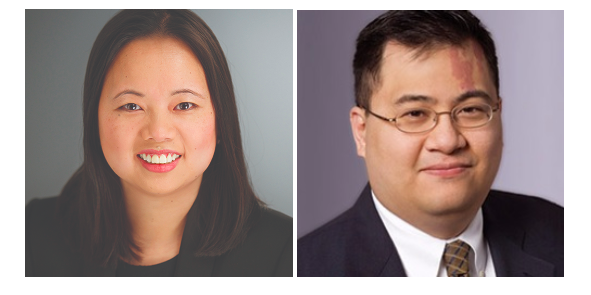
On June 10, 2022 AABANY Women’s Committee Co-Chair and AABANY Anti-Asian Violence Task Force member Jennifer Wu and AABANY Board Director Lawrence (“Larry”) Wee were recognized by Bloomberg Law in an article entitled “Why Paul Weiss Is the Pro Bono Go-To for Victims of Asian Hate.” Jennifer and Larry, both partners at Paul, Weiss, have represented some of the most high profile cases, including the families of GuiYing Ma, a grandmother who died after being bashed with a rock; Yao Pan Ma, an elderly man who was struck and kicked to death while collecting cans; and Zhiwen Yan, a deliveryman who was shot to death.
Jennifer and Larry spearhead their firm’s pro bono work fighting anti-Asian hate. They cite their close ties to New York’s Asian community as a reason for their work. Larry is a preacher at a church in Chinatown and Jennifer’s husband, Andy Woo, is a community organizer in Chinatown. Jennifer and Larry feel an urgent sense of responsibility to fight hate against the Asian community. Their urgency is well supported by AABANY’s second anti-Asian violence report, Endless Tide: The Continuing Struggle to Overcome Anti-Asian Hate in New York, which shows an increase in incidents despite media attention and calls by elected officials for change on the issue. (Paul, Weiss attorneys assisted in editing and drafting the Endless Tide report.)
Gaining the trust of victims and their families is not easy and requires great cultural sensitivity. “Often, they don’t trust people with money, and they’re worried that you’re in cahoots with authorities,” Jennifer said. She meets her clients in noodle shops in Queens rather than Paul, Weiss’ Manhattan office. Jennifer and Larry, both Chinese speakers, are the most visible members of Paul, Weiss’ fight against anti-Asian hate. They are grateful for the many additional partners, including Loretta Lynch, Jeannie Rhee, and Alan Halperin, who have been essential to the effort.
AABANY congratulates Jennifer and Larry on their well-deserved recognition. To read the full article, please click here.